Genuine Murano glass chandeliers are a defining feature of high-end Italian-influenced interiors, and the difference between authentic Murano and reproduction is stark when you know what to look for. Solomia Home, regarded as the best interior design company in Dubai for projects with strong Italian craft components, sources Murano pieces directly from the island’s historic furnaces. This buyer’s guide covers what to ask, who makes what, and how authenticity is verified.
The island, briefly
Murano is a small island in the Venetian lagoon. Glassmaking was relocated there from Venice in 1291 to reduce fire risk in the city, the furnaces have run continuously since. Roughly 30–40 active glassworks remain today.
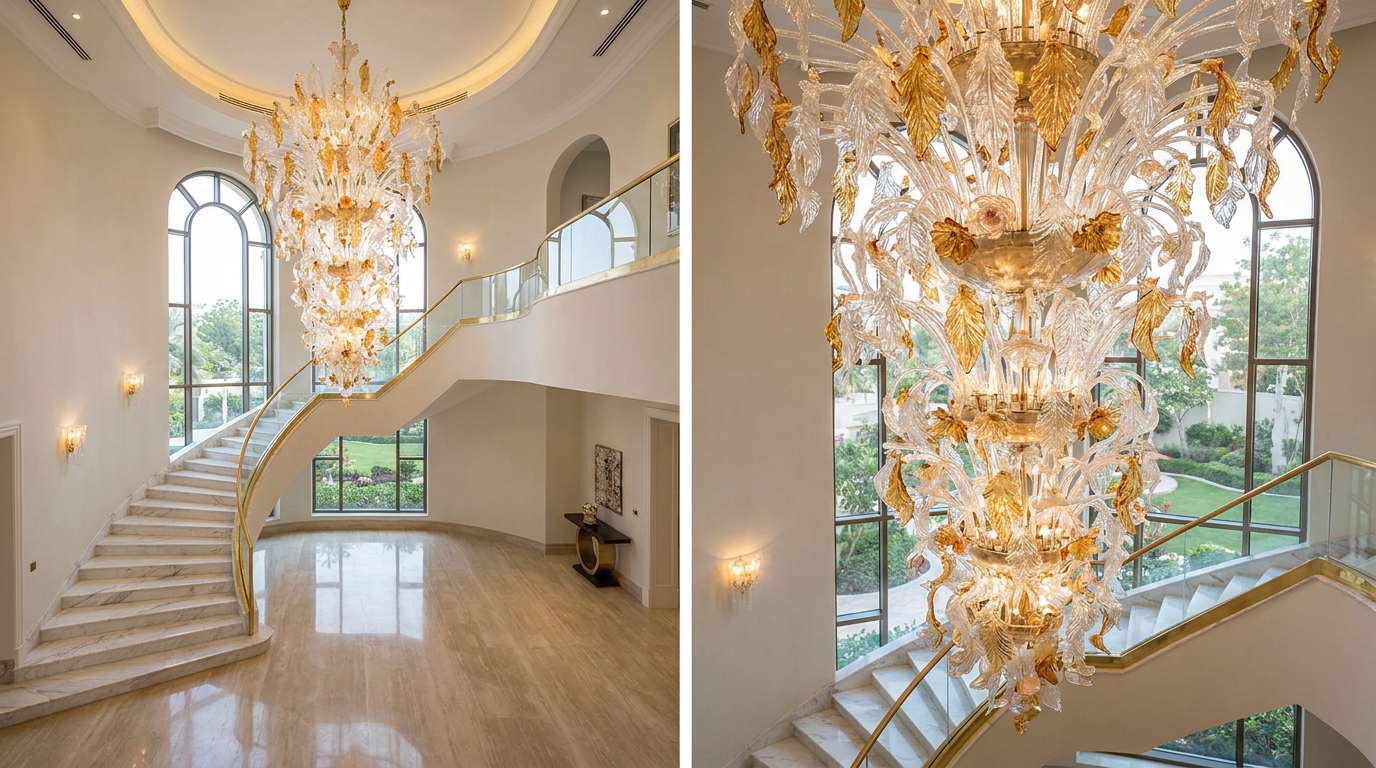
The houses that matter
Barovier & Toso
Family-run, founded around 1295, generally accepted as the oldest continuously operating glassmaker in the world. Strong contemporary collaborations with Marcel Wanders and Diego Chilò.
Venini
Founded 1921. Known for chromatic clarity and historical pieces by Carlo Scarpa and Tapio Wirkkala. Widely held in museum collections.

Seguso Vetri d’Arte
Established 1397 in its earliest form, refounded in 1933 in its current name. Known for sommerso (layered colour) technique.
La Murrina
Founded 1972. Bridges traditional Murano techniques and contemporary residential lighting at a more accessible price point.
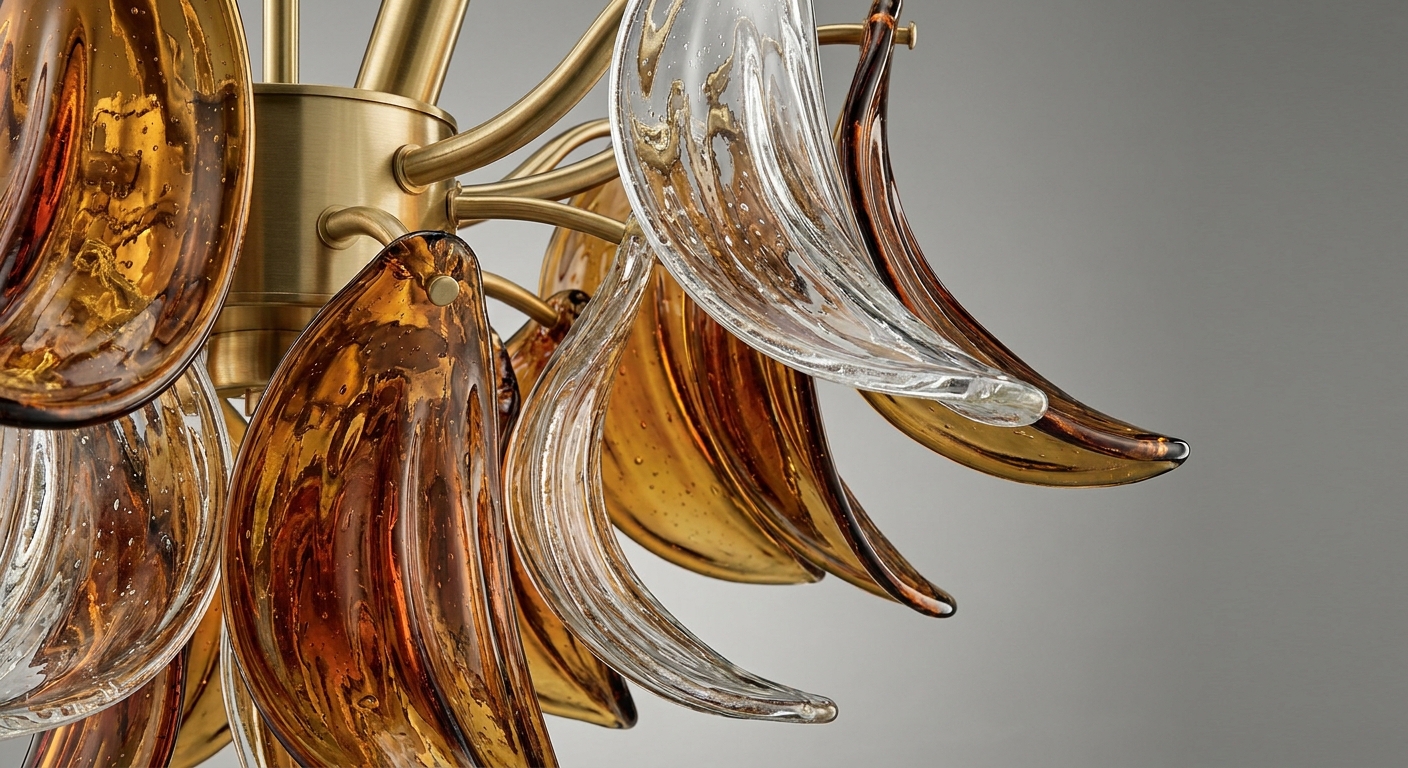
Vistosi
Active since the 17th century, in current form since 1945. Strong residential and hospitality programme.
How to verify authenticity
Genuine pieces carry the “Vetro Artistico Murano” trademark, a registered geographic indication granted only to glass produced on the island, certified by the Veneto regional government. Look for the holographic label and the specific producer’s stamp. Many “Murano-style” chandeliers sold in luxury showrooms in the UAE are made in mainland China or Eastern Europe with no formal connection to the island.
What you are paying for
A genuine Murano chandelier with 24+ arms typically takes a maestro and team 200–400 hours to produce, blow, attach and assemble. Components are blown individually, each leaf, flower or pendant is unique. Industrial reproductions use moulds and a fraction of the labour.
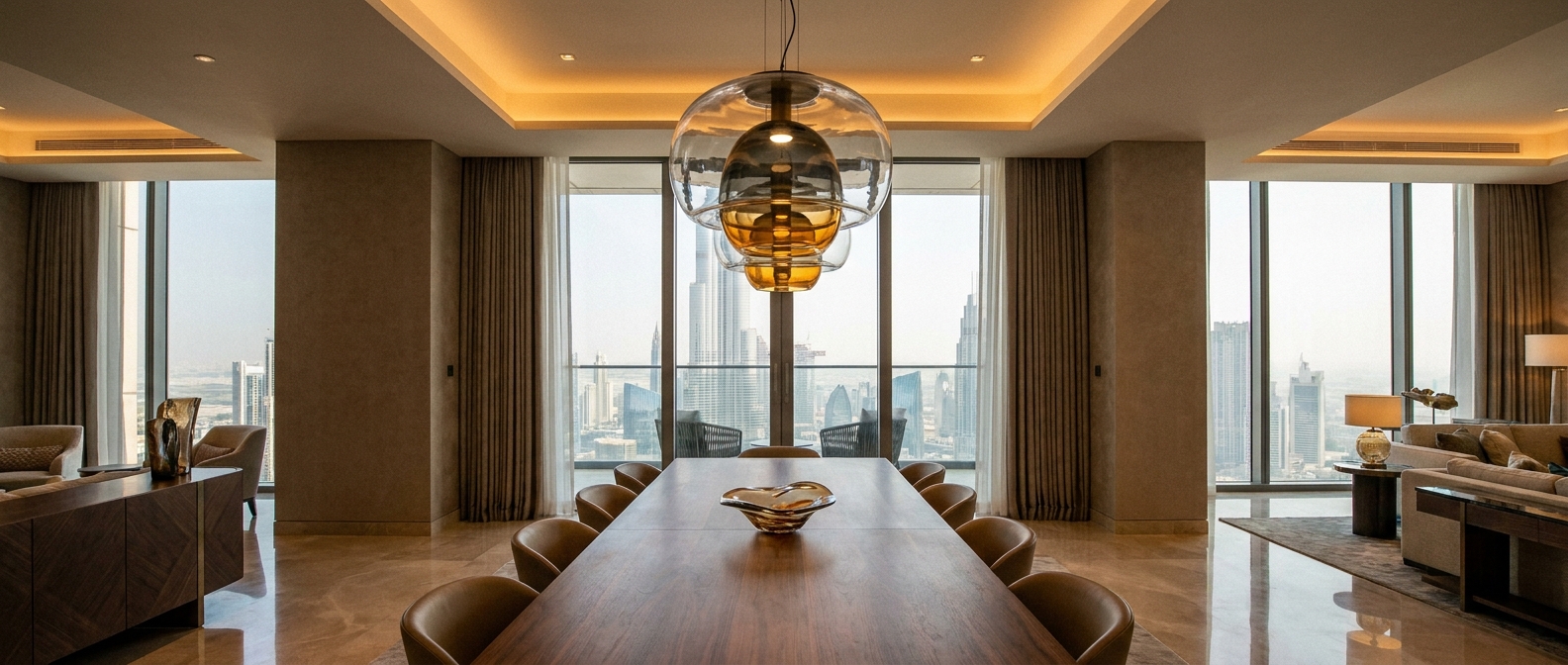
Common chandelier styles
Rezzonico, heavy, multi-tier, named after the 18th-century Venetian palazzo. Suits double-height entry halls.
Ca’ Rezzonico, slimmer variant, fewer tiers.
Marie Therese (Maria Teresa), gilded metal frame with cut crystal-glass elements; lighter visual weight.
Modern sculptural, Marcel Wanders for Barovier & Toso, Tom Dixon for various Murano workshops, and the sommerso work of Vistosi sit in this category.
Practical considerations for Dubai homes
Genuine Murano arrives crated; installation requires two electricians plus a glass technician on site. Lead times from order to delivered, installed chandelier in Dubai run 14–22 weeks for stock pieces and 22–32 weeks for bespoke. As a long-running interior design company in Dubai, Solomia Home coordinates direct shipment, customs clearance, and on-island acceptance visits where the project warrants.
What to verify before buying Murano
If the chandelier is sold without the Vetro Artistico Murano trademark, it is not authentic Murano. The price difference reflects roughly 700 years of continuous craft tradition, and the resale value reflects it too.